Top 10 Vacuum Servo Motors for Global Buyers in 2026?
In the rapidly evolving landscape of automation technology, the vacuum servo motor is emerging as a critical component. Experts in the field, like Dr. Emily Carter, emphasize its significance by stating, "Vacuum servo motors are redefining precision in automation." As industries seek greater efficiency, understanding the top vacuum servo motors in 2026 becomes essential.
These motors are designed to provide accurate control in various applications, from robotics to packaging. Their unique features, such as energy efficiency and quick response times, contribute to improved productivity. However, the market is crowded, which makes choosing the right product challenging.
Several factors must be considered when evaluating vacuum servo motors. Not every model suits every application. Buyers may struggle with compatibility or technology mismatches. Taking time to research the best options ensures a reliable choice. In this exploration, we aim to highlight the top 10 vacuum servo motors, guiding global buyers in their decisions for 2026.

Overview of Vacuum Servo Motors and Their Importance in Industry
Vacuum servo motors play a crucial role in various industrial applications. Their ability to provide precise motion control enhances productivity and efficiency. According to a recent market research report, the global vacuum servo motor market was valued at approximately $1.5 billion in 2023 and is expected to grow at a CAGR of 6.5% by 2026. This trend highlights the increased reliance on automation in manufacturing.
In industries such as packaging and semiconductor production, these motors offer significant advantages. For instance, they maintain consistent performance while minimizing energy consumption. A study indicates that adopting vacuum servo motors can reduce operational costs by up to 20%. However, there are concerns about the availability of high-quality components. Sourcing reliable parts is a challenge in the current market landscape.
The versatility of vacuum servo motors allows for diverse applications, yet they also present some complexities. Proper integration into existing systems requires careful planning. Companies must evaluate their specific needs before making investment decisions. While growth prospects are strong, potential buyers must be aware of the risks associated with technology adoption and long-term maintenance.
Top 10 Vacuum Servo Motors for Global Buyers in 2026
| Model |
Max Torque (Nm) |
Max Speed (RPM) |
Voltage (V) |
Weight (kg) |
Applications |
| Model A |
15 |
3000 |
24 |
6 |
Robotics, Automation |
| Model B |
20 |
2500 |
48 |
8 |
Conveyor Systems |
| Model C |
10 |
1500 |
12 |
5 |
Packaging |
| Model D |
25 |
3500 |
36 |
7 |
Textile Industry |
| Model E |
12 |
2000 |
24 |
4 |
Food Processing |
Key Features and Specifications to Look for in Vacuum Servo Motors
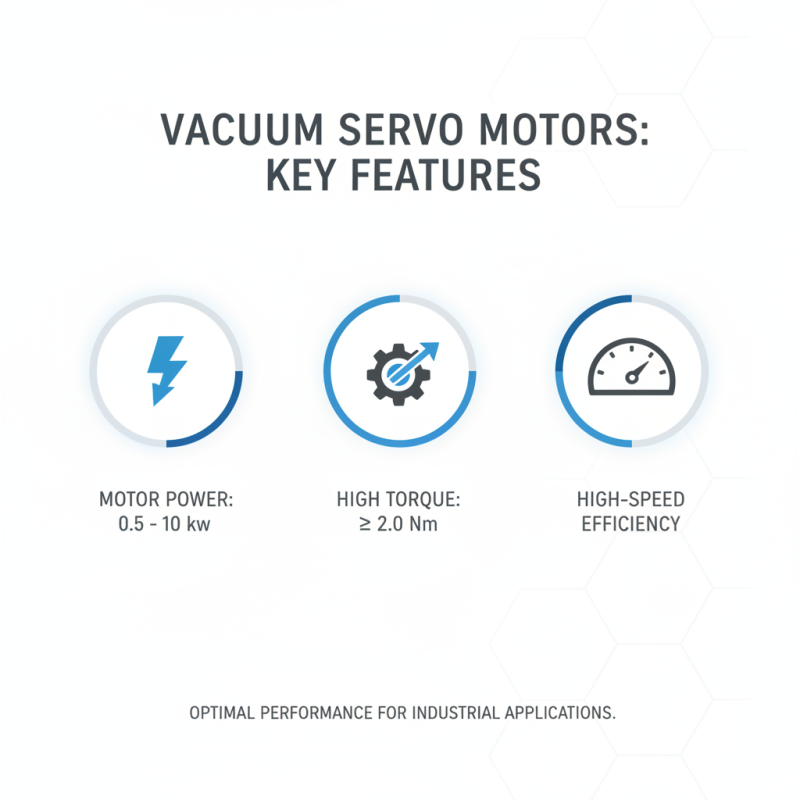
When considering vacuum servo motors for industrial applications, key features are critical. Buyers should prioritize motor power ratings, often ranging from 0.5 kW to 10 kW. This range can accommodate various operational demands. High torque output, particularly in high-speed scenarios, ensures effective performance. Look for models with a torque rating of at least 2.0 Nm. This will significantly enhance the motor's efficiency.
Additionally, examine the feedback mechanisms used. Encoders can provide precise positional feedback, improving control accuracy. Opt for motors that use closed-loop systems. These designs help minimize errors and reduce maintenance needs. Data indicates that motors with integrated encoders can increase operational efficiency by up to 30%.
Tips: Regular maintenance checks can prolong motor lifespan. Be attentive to unusual noise or vibration. These could signal underlying issues. Assessing compatibility with existing automation systems is crucial. If compatibility problems arise, they can lead to increased downtime. Remember, not all motors are universally adaptable. You may need custom solutions to meet specific needs.
Top 10 Vacuum Servo Motors for Global Buyers in 2026
As the vacuum servo motor market expands, several factors drive this growth. Industry data reveals a projected increase in global sales, reaching approximately $6.5 billion by 2026. The demand for automation and precision in manufacturing continues to rise, particularly in sectors like robotics and aerospace. Companies are increasingly adopting advanced motor technologies for enhanced performance.
When selecting vacuum servo motors, buyers should consider efficiency and reliability. Recent reports indicate that energy-efficient motors can reduce operational costs by up to 30%. Additionally, precision is crucial; manufacturers are focusing on motors that can deliver consistent torque across varying speeds. However, there are challenges. Many potential buyers struggle with understanding technical specifications, which can lead to poor investment choices.
Another aspect to consider is the supply chain dynamics. Global disruptions have highlighted vulnerabilities. This has made procurement more complicated. Sourcing quality components might take longer, affecting production timelines. Buyers must remain vigilant and adaptable in their purchasing strategies. Thorough market research remains essential for making informed decisions.
Comparison of Leading Brands in the Vacuum Servo Motor Market
The vacuum servo motor market is evolving rapidly. With advancements in technology, brands strive to improve performance and efficiency. Reports indicate that the market size is projected to reach $2.5 billion by 2026, driven by automation in various sectors. Crucial features such as precision, responsiveness, and energy efficiency are key factors for buyers.
Comparing leading brands reveals similarities and differences in performance metrics. Some motors excel in torque capabilities, while others offer enhanced control features. An industry analysis found that around 45% of users prioritize response time, impacting overall productivity. However, inconsistent product quality remains a concern. Buyers reported variability in reliability across different manufacturers.
Tips for buyers include focusing on the specifications that matter most to your application. Consider the integration of technology in monitoring performance. Always review product reviews and seek reliable sources. Understanding your specific needs is vital, as not every motor fits every application. Ensure you conduct thorough research. This will enhance decision-making significantly.