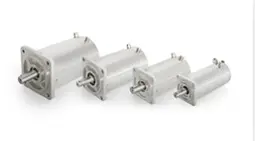
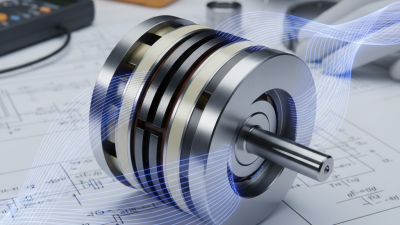
KSSM series radiation resistant servo motor
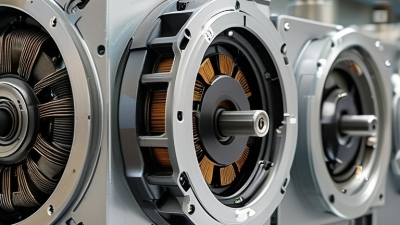
The KSSM series servo motor is a special servo motor designed for application environments such as ultra-high vacuum ultra-high tem- perature, deep low temperature, and irradiation. The shell is made of stain- less steel material and uses a rotary transformer as the motor position feedback component. Rated power of 400W, 750W.1800W, 3800W, volt- age level of 48VDC/220V AC/380VAC.
Buying Stepper Gears worldwide is not simply a matter of comparing prices. A gear may look identical in a product photo, yet perform differently under heat, vibration, or repeated load. The wrong tooth profile can create noise, backlash, and early motor failure. Small details matter.
Mechanical transmission specialist Dr. Elena Markovic explains, “A reliable Stepper Gears purchase begins with the motion requirement, not the supplier’s catalog.” Her view reflects practical engineering experience. Buyers should check torque demand, gear ratio, shaft diameter, module, material, surface treatment, and allowable temperature. They should also request dimensional drawings and load data before ordering. Sometimes, a low-cost gear becomes expensive after customs delays, replacement parts, or unsuitable machining. That possibility is easy to underestimate.
This guide presents seven practical tips for buying Stepper Gears across international markets. It considers supplier verification, sample testing, manufacturing tolerance, packaging, communication, shipping, and after-sales support. A serious supplier should answer technical questions clearly. Vague promises are not enough.
Test before scaling.
Still, no checklist removes every risk. Specifications can be incomplete. Real machines may behave differently from laboratory tests. Buyers should record operating conditions, inspect received parts, and revise assumptions when evidence disagrees. That reflective step is often missed. With careful comparison and realistic testing, global buyers can select gears that deliver stable motion, longer service life, and fewer costly surprises.
A stepper gear is a stepper motor paired with a reduction gearbox. The motor converts electrical pulses into controlled angular steps. The gearbox increases output torque and reduces rotational speed. This combination suits equipment needing position control, compact size, and steady low-speed movement. Common applications include CNC tables, 3D printers, camera sliders, laboratory pumps, textile machines, and small robotic joints.
Application defines the correct specification. A conveyor needs continuous torque and thermal endurance. A dosing pump needs repeatable positioning and low backlash. A robotic joint may require shock resistance, quiet operation, and emergency holding capacity. The International Federation of Robotics reported 541,302 industrial robot installations worldwide in 2023. This figure shows the continuing scale of automated motion systems, although it does not measure stepper gear demand directly. That distinction matters. Market reports often combine motors, gearboxes, and complete actuators, which can confuse purchasing decisions.
Tip 1: Record load, speed, duty cycle, and shaft orientation before requesting quotations. Tip 2: Calculate reflected inertia, not only static weight. Tip 3: Check rated torque at the actual output speed. Tip 4: Compare backlash, not just reduction ratio. Tip 5: Confirm voltage, connector type, mounting holes, and shaft dimensions. Tip 6: Request temperature-rise and life-test data under realistic duty cycles. Tip 7: Verify documentation, inspection records, packaging, and replacement availability. A cheaper unit may fail quickly under repeated acceleration. I have seen specifications look complete while omitting radial-load limits. That omission deserves scrutiny. Servo systems may be better for high-speed closed-loop control, while stepper gears remain practical for simpler, cost-sensitive positioning tasks.
| Tip | What Stepper Gears Are | Key Specification to Check | Typical Application | Worldwide Purchasing Requirement | Practical Buying Check |
|---|---|---|---|---|---|
| 1 | A stepper gear is a gear or gearbox fitted to a stepper motor to reduce output speed and increase available torque. The motor itself moves in discrete angular steps, while the gear stage changes speed, torque, backlash, and reflected load. | Gear ratio, output torque, rated speed, holding torque, and allowable radial and axial load. | Positioning systems that need higher torque or lower output speed than a standard stepper motor can provide. | Confirm whether the supplier states torque at the motor shaft or at the geared output shaft. | Request a dimensional drawing, performance curve, and definition of all torque ratings before comparing quotations. |
| 2 | Choose the gear type according to the motion requirement. Spur gears are simple and efficient; planetary gears provide compact size and higher torque density; worm gears provide high reduction and may offer self-locking depending on the design. | Efficiency, backlash, reduction ratio, noise, duty cycle, and whether reverse driving is required. | Spur: light-duty mechanisms; planetary: compact precision axes; worm: lifts, valves, and mechanisms requiring large reduction. | Check the supplier's terminology because “self-locking” is not guaranteed for every worm gear ratio or load condition. | Compare gear efficiency and backlash at the same ratio rather than choosing only by motor size. |
| 3 | A stepper motor produces rated holding torque when energized and stationary. Usable running torque decreases as speed increases, so the geared output must be selected from a torque-speed curve rather than from holding torque alone. | Pull-out torque, acceleration torque, load torque, inertia ratio, and required safety margin. | Indexing tables, feeders, pick-and-place equipment, and linear actuators with controlled acceleration and deceleration. | Ask for curves using the intended driver voltage, current, microstepping setting, and operating temperature. | Calculate output torque approximately as motor torque × gear ratio × efficiency, then include an engineering margin. |
| 4 | Gear reduction affects positioning behavior. Backlash is the lost motion caused by clearance between mating teeth and can reduce repeatability, especially when the load direction changes. | Backlash, torsional stiffness, transmission error, repeatability, and output-shaft runout. | Low-backlash planetary systems are generally better suited to robotics and precision positioning than high-clearance gear arrangements. | Require backlash to be stated in angular units, such as arcminutes or degrees, under a defined test load. | Do not treat a high motor step count or microstepping resolution as proof of equivalent mechanical accuracy. |
| 5 | The motor and gearbox must match the mechanical interface. Common checks include frame size, mounting-hole pattern, shaft diameter, shaft length, keyway, connector position, and output orientation. | Metric dimensions, mounting tolerance, shaft fit, flange geometry, connector clearance, and cable exit direction. | Replacement assemblies, OEM machines, conveyor mechanisms, scanners, and automated production equipment. | Use millimetres for mechanical dimensions and verify whether drawings follow ISO metric or another dimensional standard. | Match the complete interface drawing instead of relying only on nominal motor frame designations. |
| 6 | Stepper gear assemblies are sensitive to heat, contamination, and incorrect lubrication. Temperature affects winding resistance, lubricant performance, and the service life of seals and bearings. | Insulation class, operating temperature, ingress protection, lubrication method, duty cycle, and expected service life. | Enclosed machinery, laboratory instruments, packaging equipment, and applications exposed to dust or occasional cleaning. | Confirm environmental ratings and required certifications for the destination market and installation environment. | Verify the permitted mounting orientation and maintenance requirements, especially for oil-lubricated gearboxes. |
| 7 | Buying worldwide requires technical, regulatory, and logistics verification. The correct product must be electrically compatible, mechanically interchangeable, legally importable, and supportable over its service life. | Rated current, phase resistance, inductance, driver compatibility, documentation, packaging, lead time, and warranty terms. | Exported machinery, multi-country production lines, replacement-parts programs, and distributed automation projects. | Check electrical safety, electromagnetic compatibility, customs classification, country-specific voltage requirements, and available technical documents. | Order a sample or engineering unit first and perform load, temperature, noise, backlash, and endurance tests before volume purchasing. |

Buying stepper gears worldwide requires more than comparing prices. Start with gear type: spur gears suit simple parallel shafts, while helical gears run more quietly. Bevel gears change direction, and planetary sets deliver compact torque multiplication. Tip 1: Match the gear arrangement to shaft geometry. Tip 2: Confirm the ratio under real load, not only catalog speed. A 10:1 ratio can still disappoint if backlash is excessive. Ask for measured backlash and tooth accuracy.
Material strongly affects service life. Hardened steel handles repeated torque and shock, while stainless steel supports humid environments. Aluminum reduces weight but may wear faster at tooth contact. Engineering plastics can reduce noise, though heat and chemicals may weaken them. Tip 3: Compare hardness, tensile strength, and surface treatment together. Tip 4: Request test data, not vague claims. I once favored a lighter gear, and the assembly became quieter. It also showed wear sooner than expected.
Size must fit more than the shaft diameter. Check face width, bore tolerance, keyway dimensions, mounting space, and motor inertia. Tip 5: Compare outside diameter and center distance in a physical layout. Tip 6: Review rated torque, allowable speed, efficiency, noise, and backlash at the same temperature. Tip 7: Confirm inspection reports, packaging, replacement support, and delivery terms before ordering internationally. Small dimensional errors can stop installation. Performance figures may be optimistic. Recheck them.
Buying stepper gears worldwide requires more than comparing unit prices. A supplier may hold ISO 9001 certification, yet that certificate does not guarantee accurate teeth or stable torque. The ISO Survey 2023 recorded about 1.27 million ISO 9001 certificates globally. Treat certification as a screening tool, not proof of product quality. Ask for the certificate scope, issuing body, expiry date, and manufacturing location.
Check whether the supplier measures backlash, radial runout, tooth accuracy, hardness, and surface finish. Request inspection reports from the same production lot. For load calculations, compare testing with ISO 6336 methods or relevant AGMA practices. Material certificates should identify grade, heat treatment, and traceability. A clear serial-number system helps when a batch later shows unusual noise. Small details matter.
Do not approve samples too quickly. Test gears under real temperature, speed, lubrication, and repeated start-stop cycles. The International Federation of Robotics reported 541,302 industrial robot installations in 2023, reflecting rising demand for dependable motion components. However, supplier capacity can hide weak process control. An impressive factory tour proves little without records.
I once underestimated packaging risks; fine teeth arrived with visible edge damage after international transport. Use protective trays, moisture barriers, and drop-test evidence. Certification labels look reassuring. Measurement results are stronger.
Buying stepper gears worldwide requires more than comparing unit prices. Ask for a quotation that separates gear cost, tooling, packaging, and inspection fees. Confirm the minimum order quantity, because a low price may require hundreds of pieces. Request one sample before placing a larger order. Measure tooth profile, bore size, material, and operating noise. Small errors can affect motor alignment.
Shipping changes the real cost. Compare air freight, sea freight, and courier delivery by weight, volume, and urgency. Confirm the Incoterm and identify who handles export documents, insurance, and customs clearance. Ask for production and dispatch dates in writing. I once focused too heavily on the product price and underestimated freight charges. That mistake reduced the expected savings.
Taxes and import rules also need careful checking. Ask the supplier for the correct HS code, country of origin, material details, and commercial invoice information. Verify duty rates, value-added tax, labeling requirements, and restricted-material rules with your customs authority. Requirements vary by destination and may change. Keep all technical drawings and payment records. Check whether the gear needs safety documentation or special packaging. Clear documentation protects the shipment and supports a reliable supplier relationship. Mistakes still happen, so leave time for customs delays and rechecking.
Buying stepper gears worldwide requires more than comparing prices. Compatibility errors often appear after installation. Check the gear ratio, shaft diameter, bore, keyway, mounting pattern, and rated torque. Ask for a current drawing and tolerance data. Match the gear to the motor’s speed range, load cycle, and backlash needs. A smooth test spin is not enough.
I once approved a gear from a clean drawing, then found the shaft shoulder was too short. That mistake delayed assembly for days.
Request warranty terms in writing before payment. Confirm the coverage period, accepted failure conditions, inspection steps, and shipping responsibilities. Ask whether wear, noise, or incorrect installation are excluded. A vague warranty creates risk.
Keep purchase records, test photos, and serial details. They make claims more credible. Technical support should provide more than a generic PDF. Test the response with a specific question about lubrication, alignment, and allowable temperature. Good support answers clearly and admits limits.
Clarify the return policy before ordering samples or production quantities. Check the return window, restocking charges, custom-part exclusions, and international shipping responsibilities. Ask how defective units are tested and replaced. Small details matter.
Use written approval for the selected specification. It protects both sides when specifications change. I still leave room for uncertainty, because catalog dimensions may not reflect every production batch.