Top Uses of Stepper Motor Rotor in Modern Technology?
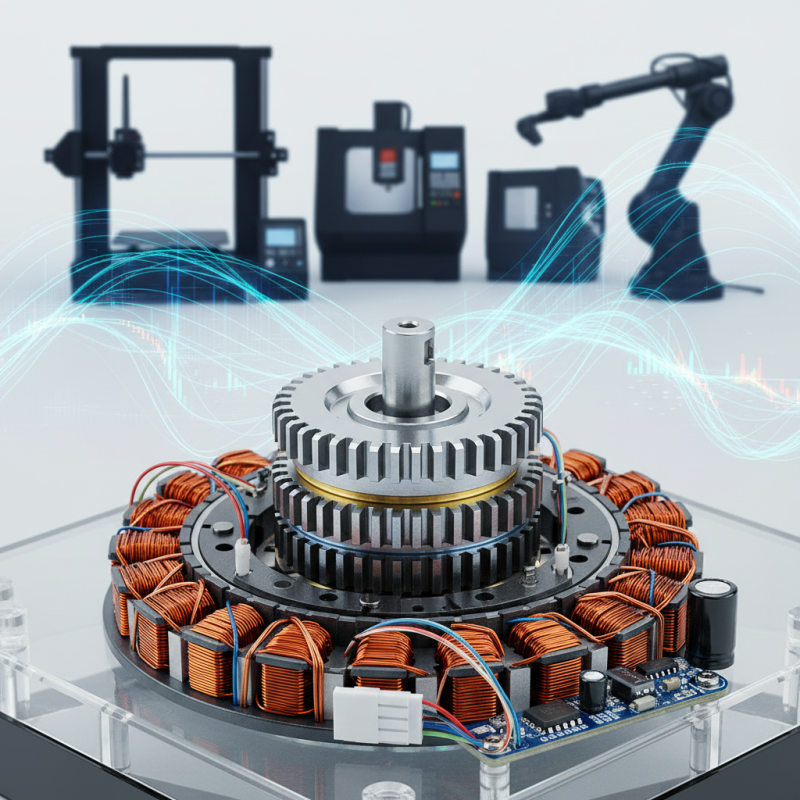
In the realm of modern technology, the stepper motor rotor plays an essential role. Renowned expert Dr. John S. Felton, a leader in robotics, emphasizes this importance: "The stepper motor rotor is key to precision in motion control." Its applications are diverse, ranging from 3D printers to CNC machines, illustrating its versatility.
Stepper motors are popular because they provide accurate positioning. This makes them ideal for various industries such as manufacturing and automation. Each rotation of the stepper motor rotor is controlled with great precision. However, challenges remain. Efficiency and heat management can pose issues in certain scenarios.
As industries continue to evolve, understanding the stepper motor rotor’s capabilities is crucial. The demand for innovation drives exploration in this field. Yet, there is still much to learn. Balancing performance and reliability is an ongoing quest for engineers. Enhancing design can lead to even greater applications in the future.
Applications of Stepper Motor Rotors in Robotics
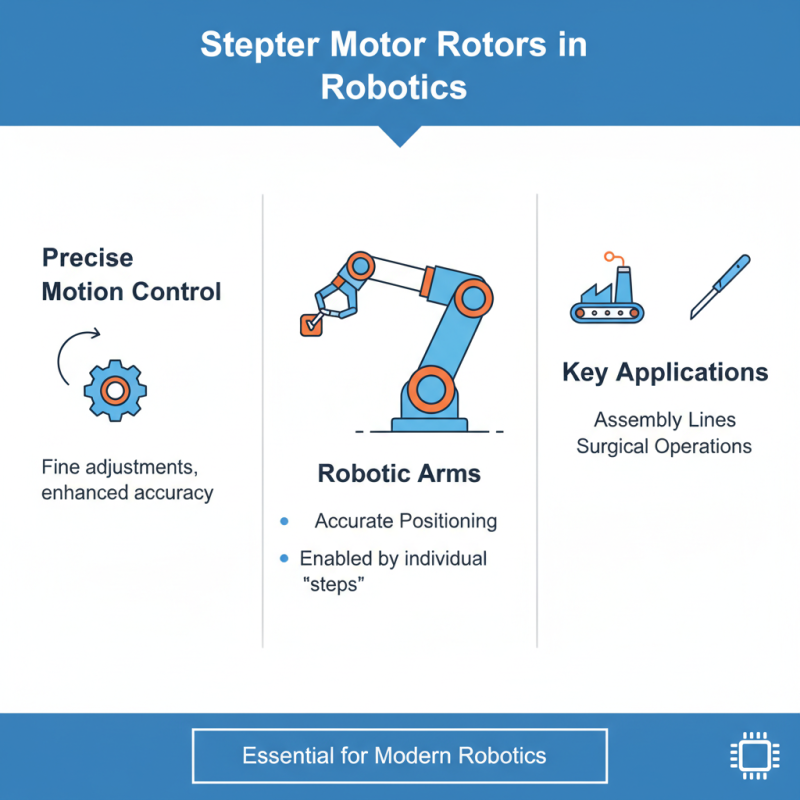
Stepper motor rotors play a crucial role in robotics. They provide precise control over movement, which is vital for robotic applications. In robotic arms, stepper motors enable accurate positioning. Each step allows for fine adjustments, enhancing the arm's precision. This capability is essential in assembly lines and surgeries.
Another area of application is mobile robots. Here, stepper motors drive wheels and legs. They ensure accurate maneuvering in complex environments. This is particularly important in tasks like exploration or delivery. The ability to control rotation in small increments makes navigation reliable. However, there can be drawbacks. Sometimes, stepper motors may lose steps under heavy loads. This leads to inaccuracies, necessitating constant monitoring.
In autonomous robots, stepper motors contribute to sensor movements. They help in scanning environments effectively. The adjustable speed and torque allow flexibility in various situations. Yet, the need for precise calibration is vital. Misalignment can impact performance negatively. Thus, while the potential is vast, vigilance is crucial.
Role of Stepper Motor Rotors in CNC Machinery
Stepper motors are essential in CNC machinery, playing a critical role in precision engineering. These motors rely on discrete steps to control rotation, allowing for exact positioning. They are widely used for tasks like milling, engraving, and 3D printing. The ability to pause and adjust after each step ensures high accuracy in complex designs. This is crucial in industries where detail matters.
In CNC applications, the rotor’s design directly affects performance. The magnetic fields in the rotor interact with a stator to create movement. However, achieving smooth motion can sometimes be tricky. Inconsistent power supply or mechanical resistance can lead to missed steps. This inefficiency can impede productivity. Proper calibration and maintenance can mitigate these issues, enhancing performance.
Moreover, the implementation of stepper motors in CNC systems allows for multi-axis operations. This means higher production rates and more complex designs. Yet, there are challenges to consider. These systems may struggle with acceleration and inertia. As a result, users often find themselves assessing trade-offs between speed and precision. It's a balance that requires constant evaluation to optimize output.
Integration of Stepper Motor Rotors in 3D Printing
The integration of stepper motor rotors in 3D printing has revolutionized production. These motors provide precise control over the printing process, which is critical in producing intricate designs. According to a report by the International Data Corporation (IDC), the 3D printing market is expected to grow by 25% annually. This growth highlights the increasing demand for accurate, efficient machinery.
Stepper motors are favored for their ability to move in discrete steps. This allows for meticulous layer-by-layer printing. The accuracy can reach 0.1 mm in some applications, making it ideal for both prototyping and manufacturing. However, not every setup achieves optimal performance. For instance, poor alignment can lead to layer misplacement. This can compromise the integrity of a print.
Moreover, the energy efficiency of stepper motors is significant. Studies show that they consume up to 50% less energy than traditional motors in certain applications. Yet, high torque at low speeds might lead to overheating. This raises concerns for sustained operations. While stepper motors have changed 3D printing, users must remain vigilant about their limitations and challenges.
Impact of Stepper Motor Rotors on Automotive Technologies
Stepper motors play a vital role in automotive technologies today. Their precise control makes them ideal for applications such as electronic throttle control and anti-lock braking systems. These components rely on quick and accurate responses. They enhance vehicle safety and performance, but not without challenges.
In electric and hybrid vehicles, stepper motors help manage power effectively. They control different systems, like cooling fans and power steering. Yet, these motors can experience overheating and wear over time. This can lead to failures, which are costly to fix.
While stepper motors offer many benefits, their limitations need addressing. Engineers continuously seek improvements to enhance reliability. Increasing performance while minimizing maintenance remains essential. In a rapidly evolving automotive landscape, stepper motors will undoubtedly shape the future.
Advancements in Medical Devices Utilizing Stepper Motor Rotors
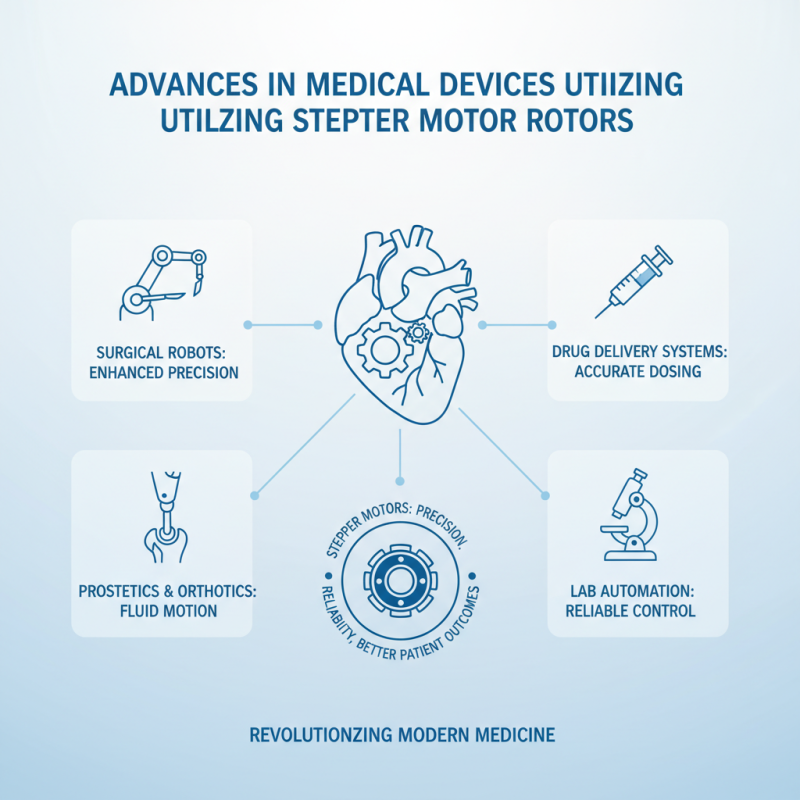
Stepper motor rotors are revolutionizing modern medical devices. Their precision control and reliability make them ideal for various applications. In surgical robots, these motors enhance movements with exactness. Surgeons can perform intricate tasks with minimized risk. This integration allows for better patient outcomes.
In imaging devices, stepper motors provide smooth positioning. MRI machines need accurate adjustments for optimal scans. The motor's feedback system ensures consistent performance, reducing errors. However, reliance on these motors can present challenges. Calibration issues may arise, impacting image quality.
Moreover, in prosthetic devices, stepper motors enable real-time adjustments. Users enjoy enhanced mobility and responsiveness. Yet, the programming for these systems requires thoughtful consideration. If not fully optimized, patients may experience discomfort. This reveals how advancements come with certain complexities that require continuous improvement.